Monday, March 06, 2006

The Art of Writing at its Best

Woman’s World, a novel by Graham Rawle is endorsed on the cover by Joanna Lumley: ‘As mad and believable as a dream’. This description is so accurate she deserves a medal for it, and the author deserves something better than the Booker Prize and Turner Prize put together. The novel is a real work of art.

I’m apparently unusual because I can read this whole book where the typeface varies in size and style from word to word or more. It’s like a book of ransom notes. The text is put together in a collage of words and letters from women’s magazines. It was hyped up as an object of curiosity at its launch in the broadsheet papers in the autumn of 2005, which was what made me put it on my Christmas List. When I showed it off as a prize gift from my husband people looked at a few pages and said, “God, I couldn’t read a whole book like that!” I put my ability to do so down to being used to all manner of manuscripts. How lucky I am, this novel has restored my faith in good fiction as art.

The narrator is Norma Little who calls herself Norma Fontaine and is the epitome of femininity. She shows us this from page one and reveals herself to be a highly perfectionist, narcissistic lady of leisure with a housekeeper and a brother whom she adores. “…My entire day is filled with womanly pursuits and the house is alive with feminine appeal.” You soon get used to her exaggerated self-admiration and over-the-top obsession with all things feminine. This is, after all, the early 1960s, after the oppression of the war years and emergence into the colourful freedom of red stiletto shoes and bright artificial flowers. One feels an immediate rapport with this woman’s dedication to escapism.

I settled happily into reading each page as it came with this in mind; and the sudden explosions of words like Soap Pads! next to, ‘an intimate portrait of a modern woman’, or Hovis just kept me riveted. The artist makes wonderful use of snippets of advertising copy, beautifully woven into the narrative giving Norma’s voice a fascinating edge of dreamlike déjà vu. Anywhere else it would seem contrived but here it simply adds to the escapism, you’re compelled to read on because you know there’s more to Norma than the pristine make-up and hair. After all, she describes in astute detail the road accident scene in the first chapter so that without gory language or resorting to horror we know she’s ready to tell the truth.

There is something fabulous about the prose in this book, even though it’s so artificial and Norma is so vain. I cannot replicate the styles of fonts but believe me there are many, including an Ecclesiastic design in the excerpt that follows.

‘She always has to know everybody’s business. I’d a good mind to stare back at her in defiance, but the postman was vying for my attention.
“A parcel for the gentleman of the house,” he announced, eyeing my neat but generously proportioned figure with sharp blackcurrant eyes.
“My brother, Roy, isn’t here. He’s in the Himalayas, daring to pit human courage and skill against Nature.” I wasn’t quite sure why I’d said it; it wasn’t strictly true.
The postman’s goggling eyes were the deep blue of two enamel pans in the sink, and in his eyes there was frank admiration, cleverly masked by a keen look of indifference.
He leaned down and picked up a parcel from his postbag. “I’ll need you to sign for it,” he said, holding out a fountain pen. “But first give me your name.”
We continued to stand and stare at each other, until he said again: “What’s your name?”
“If you want to know you can guess,” I retorted playfully.
“Quite the little spitfire, aren’t you?” The amusement in his tone stung like wasps on a baby’s bottom.’

What appeals to me especially about this book is its surreal use of images and ideas. Not being a Guardian reader I knew nothing of Graham Rawle as an artist/illustrator but whilst reading I was in no doubt that he’s also a very skilled writer. Characterisation, pacing, prose, suspense and satisfaction – it’s all there and when I got to the end I wanted more! In recent months I’ve had a malaise over reading fiction. Nothing grabbed me, gave a thrill of excitement or intrigue and I wondered if my profession had killed it for me. Not so, I have found a book that I’m sure I’ll read again, perhaps year after year, for its sheer entertainment value.

If you’re not sure you’ve the dedication to attempt the book and haven’t yet met this man’s work I urge you to visit http://www.grahamrawle.com/Shop/shop1.html where you’ll get a taste of his wonderful humour.

Woman’s World by Graham Rawle, Creator of Lost Consonants is published by Atlantic Books, hardback. ISBN 1 84354 367 2

Some gems from the archives


When you run an evening class you’re constantly looking out for different ways of saying what needs to be said. For years I had ‘document wallets’ full of cuttings and notes to myself of things that might be useful; and in my recent paperwork purge I whittled them down to a few unusual pieces worth airing. The rest are so firmly entrenched in my brain that I churn them out daily on demand and I was able to shred the original written evidence.

Vignette

In her hand she held a crumpled piece of paper. She folded it and unfolded it, absently; as if doodling with her fingers. It was something physical to occupy her while her brain coped with all she heard and saw.

She opened it again again and looked at it. “Well,” she said. “No I won’t read it!”

There was encouragement. “Come on. You know us,” said someone, gently.

“Nope. Nope. It’s not fit to read out. It’s no good. I can’t. I can’t read it.”

“Well shall I read it for you?” said somebody else.

“No. Nope. Nobody’s going to read it.

“She folded it again and then screwed it in her hands. The conversation drifted elsewhere. Somebody had something more important to say.

The ball of paper remained in her hand, soft with sweat from her palms.

And soon there was a vacancy in time. A gap waiting to be filled.

“Well alright then,” she said without any prompting. “Perhaps I will. Perhaps I’ll read it.”

She unfolded the paper from her hand. “ I have to warn you though. It’s . . . not very good.”

People made warm encouraging noises, careful of where to tread, lest overpowering encouragement should boost up too much expectation; yet fearing that not enough could result in her screwing it up again into a tiny crumpled ball.

“As I said. It’s not very good. It’s just something I wrote. Long time ago.”

They waited.

“It’s called . . . ”

[She did read it, it was OK. I don’t remember the content.]

This little vignette is a raw observation: I wrote it so as to remember the nuances. It shows why I understand the need for Writing Life® to be entirely confidential and by correspondence; and it was probably instrumental in formulating my determination to pursue the course as we know it.

© Bernie Ross 2006

Notes from I don’t know where - but rather useful anyway

In a good story –
  • There must be something at stake.
  • The process of getting it must be suspended.
  • Read any good book for examples.
  • Ask powerful questions.
  • The writing should be the equivalent of a camera that also records sounds and atmosphere. (Does a camera have opinions? I think not!)
  • Write it backwards – how can the clues slip out?

Monday, February 13, 2006

All is Not Lost

There were some little gems on the old message board and you might feel a few 'darlings' were lost forever when it closed, but not so. It's still available on http://www.writinglife.org.uk/studentsold/view.php - with the usual username and password - and if you'd like to retrieve anything from it you're welcome. You can publish them on here and add pictures - of yourselves, your homes or your pets or pet loves - if you like; all in the spirit of sharing. Want to know how to do it? Very easy, get in touch with Bern. If Trevor and Barbara can do it, so can you.
Bernie

Sunday, February 05, 2006

Hindsight

Hindsight

The skin coloured patch over his left eye gave him a sinister look. He peered through his one clear eye, outlined by the black arched eyebrow. His gait uneven and awkward as he took a few steps forward, he walked with his arms outstretched to give himself balance. An old black and white baseball cap sat firmly on his shaven head. His white, short-sleeved shirt crumpled and damp with perspiration stuck to his back.
He supported himself, by gripping the roof of the car, as he opened the door to climb into the passenger seat. His legs abandoned the messages sent to them and he fell face forward into the car, his arms not quick enough to hold his weight. He struggled to compose himself and strained to push his body into a position where he could pull himself upright once again. His face wet with sweat, he rested for a moment.
He saw his mother leaving the glass-fronted building. Straining with effort he arranged his limbs into a sitting position. She looked happy as she approached the car, unaware of his recent fall. She smiled at him and seated herself, squeezed his arm and started the engine. She was delighted to be taking him home. They drove in silence for a while, awkward with each of their thoughts. A motorbike overtook them on the dual carriageway; its deep growl of acceleration gave him butterflies in his stomach. He looked, as did his mother at the figure on the bike as it disappeared into the distance. The rider was wearing a crash helmet, their thoughts remained unspoken. He knew she was thinking the same thoughts. If only he had worn his on that fateful day.

by Barbara A. Rope

Saturday, February 04, 2006

Let's Start at the Beginning

And ask ourselves:

Have we got it wrong?

On a day like today all hot and sticky
Stuck at work not taking the mickey
Running wild beside the pool
Or feeling really cool
With a blonde on the side

Just now a child died
Having nowhere to hide
Her belly full of pain
So who shall gain
From our work in the sun

Bush rules the world
So we all need to hide
For what have we learnt
From years on our knees
Hoping God’s on our side.

You may gather that I cheated. This is a poem written last summer, but we do need to look at our world and wonder, just sometimes.

I'm Trevor, scribbler, who may appear from time to time.

Thursday, February 02, 2006

Playground # 6


Welcome to the Sixth Edition of Playground.

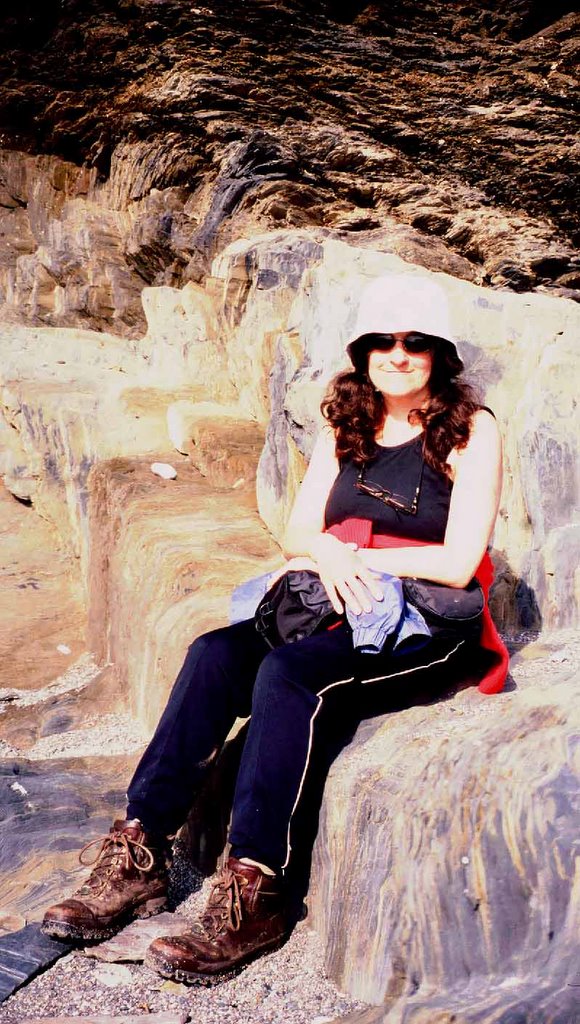
Here is a picture of Barbara's locality. See her descriptions under the heading 'The Message Board'.

Some important information is here for you and I’m sorry there are fewer pictures than usual: I haven’t had time to go looking for them.

Bernie

~ ~

From: Community Safety Co-ordinator, Colchester Borough Council

"As part of reducing crime in Colchester I have had several emails from CBC colleagues and partner agencies relating to a credit card security check scam that is becoming increasingly prevalent over the last few weeks with more victims each day."

It applies to us all, everywhere:

CREDIT CARD SECURITY SCAM

This information is worth reading. By understanding how the VISA & MasterCard Telephone Credit Card Scam works, you'll be better prepared to protect yourself.

One of our employees was called on Wednesday from "VISA", and I was called on Thursday from "MasterCard". Note, the callers do not ask for your card number; they already have it. The scam works like this: Person calling says, "This is (name), and I'm calling from the Security and Fraud Department at VISA. My Badge number is 12460. Your card has been flagged for an unusual purchase pattern, and I'm calling to verify. This would be on your VISA card that was issued by (name of bank). Did you purchase an Anti-Telemarketing Device for £249.99 from a Marketing company based in (name of any town or city)?" When you say "No" the caller continues with, "Then we will be issuing a credit to your account.”

They go on, “This is a company we have been watching and the charges range from £150 to £249, just under the £250 purchase pattern that flags most cards. Before your next statement, the credit will be sent to (gives you your address), is that correct?" You say "yes". The caller continues - "I will be starting a Fraud investigation. If you have any questions, you should call the 0800 number listed on the back of your card and ask for Security. You will need to refer to this Control Number.” The caller then gives you a 6 digit number. "Do you need me to read it again?" Here's the IMPORTANT part on how the scam works. The caller then says, "I need to verify you are in possession of your card". He'll ask you to "turn your card over and look for some numbers". There are 7 numbers; the first 4 are part of your card number, the next 3 are the Security Numbers that verify you are the possessor of the card. These are the numbers you sometimes use to make Internet purchases to prove you have the card.

The caller will ask you to read the 3 numbers to him. After you tell the caller the 3 numbers, he'll say, "That is correct, I just needed to verify that the card has not been lost or stolen, and that you still have your card. Do you have any other questions?" After you say No, the caller then thanks you and states, "Don't hesitate to call back; if you do....", and hangs up. You actually say very little, and they never ask for or tell you the Card number. But after we were called on Wednesday, we called back within 20 minutes to ask a question. Are we glad we did! The REAL VISA Security Department told us it was a scam and in the last 15 minutes a new purchase of £249.99 was charged to our card. Long story made short - we made a real fraud report and closed the VISA account. VISA is reissuing us a new number. What the scammers want is the 3-digit PIN number on the back of the card. Don't give it to them.

Instead, tell them you'll call VISA or Master card directly for verification of their conversation. The real VISA told us that they will never ask for anything on the card as they already know the information since they issued the card! If you give the scammers your 3 Digit PIN you think you're receiving a credit. However, by the time you get your statement you'll see charges for purchases you didn't make, and by then it's almost to late and/or more difficult to actually file a fraud report. What makes this more remarkable is that on Thursday, I got a call from a "Jason Richardson of MasterCard" with a word-for-word repeat of the VISA scam. This time I didn't let him finish. I hung up! We filed a police report, as instructed by VISA. The police said they are taking several of these reports daily! They also urged us to tell everybody we know that this scam is happening.

Please pass this on to all your family and friends. By informing each other, we protect each other."

~ ~

LifeLines – February 2006

Ways To Keep Writing When You Haven’t Got Time

1) Writing a daily diary can be a bit much when there aren’t enough hours in the day to keep up with some of the essentials; and even a weekly diary entry gets pushed to the next week and the next . . . But ‘Goodbye January’, written like a letter to that month, is a good way of recording the key events and writing a few sentences about how you felt during the month. The season leaves its mark too, so that ‘Goodbye February’ will be different in character, expressing the subtle differences that time and growth bring to our lives. Each can be written in hindsight as the month drifts into the next. By the end of the year you’ll have twelve diary entries that were well worth recording.

2) Writing in hindsight is often ‘informed’ and prone to being bookish. By contrast it’s good to write pure observations, on the spot, rather like an artist sketches from life. Written observations make you feel like a writer (your pad on your knee in the restaurant or sitting on a bench in town . . .) and the resulting descriptions of people’s clothing and actions become characterisations you never knew you’d create.

3) Have you read a letter in a magazine or newspaper that made you want to answer back? Do it! It doesn’t matter about sending it, just write it. Writing is a tool of thought and you never know what thoughts might develop in the process of writing your mental response to something that’s in print.

4) When you finish reading a book or story, write a few sentences about it, keeping a note of its title, the author, the publisher and ISBN and/or library Dewey number. It’s worth keeping a notebook especially for these little write-ups so that when you want to refer to that book, subject or author again you’ll have it all in one place. You might even, some time, use it as a starting point for a book review.

5) An A6 spiral notebook lies flat and is small enough for any pocket. A stub of a pencil is more healthy than a cigarette lighter. Keep both the notebook and pencil with you at all times and use them. Remember: a single word, a phrase or a list can be expanded to incorporate so much more when your mind is free to roam. And there will be the time and space for it to do so, sooner or later.

Rome wasn’t built in a day.

© Bernie Ross 2006

~ ~

In future, students will be able to add their own articles and stories to the Writing Life Playground, any time. All they need to do is get the private username and password from Bernie. You just paste the words into a box and there are icons to click on for special fonts, italics etc. Easy-peasy. Pictures can be added too. Here is your chance to take part in ‘publishing’ for real.


See below for an excerpt from the WL Message Board.

~ ~

DIGGERS

by Colm Keenan

The two men stopped their work for a cigarette break. The day was hot and humid, but they knew that the more work they got done, the more they would soon be in the shade. A multitude of infant voices could be heard over at the school out in the courtyard. A brood of hungry crow chicks squalled high above the church wall –their parents having returned with some of that highly nutritious regurgitated worm.

‘How many years are we at this now, Paddy?’ asked one of the diggers as he took a big puff out of his cigarette.

‘Let me see…I finished in Murphy’s in…must be twenty-two years, Tom.”

‘That’s a long time! Do you ever feel bad at what we get paid for, Paddy?’

‘Not at all. I just dig and dig and dig. Six feet down, and then I go home.’

‘But do you ever think of the people who are being laid to rest in the holes that we dig, Paddy?’

‘Now, Tom! What sort of a question is that from a good Catholic man such as yourself who has never missed Sunday Mass in nine years in this parish, since you went over to Scotland to visit your brother! Father Leavy would not be impressed with that statement. We are just burying the bodies. The souls have departed to the good place. If we didn’t bury them they’d stink up the area, and we’d get every sort of disease possible. Our job actually saves lives, Tom. If these bodies were not buried, many people would get very sick.’

‘I suppose when you put it that way, Paddy. However, if we are just burying the bodies, why does the Church have a big burial ceremony, if the soul has departed? And why will the family of the deceased probably get a big fancy marble headstone with gold coloured inscription? And also, why will the family and friends of the deceased come here many times throughout the year and kneel on their brittle knees upon the solid marble?’

‘So many questions, Tom! Maybe because we can’t see the deceased until we die: the Grave is the closest we can get to them. I’m not sure, but there’s the man to explain it all. How’s it going, Father? A hot one, isn’t it, Father?’

Father Leavy was just entering the graveyard, about twenty metres from them - the two diggers’ shoulders and heads were all that could be seen from level with the ground. Father Leavy approached the side of the grave and stood tall against the sky. He looked down at the men as he talked:

‘Gentlemen! Yes, Paddy, it is very hot today; but I see you are almost in the shade there. How’s Betty today, Tom?’

‘Oh she’s keeping well, Father. I’ll tell her you were asking after her.’

‘Do indeed! How long are you married now to that wonderful woman, Tom?’

‘Twenty two years now, Father,’ replied Tom respectfully.

‘How time passes. It feels like only yesterday when I was asking you your wedding vows. You were a young gossoon then,’ remarked the priest.

‘Father?’ Asked Paddy - who had been taking a few quiet whiffs of his cigarette while Tom and the priest were talking, ‘Tom was asking me some very clever theological questions just prior to your arrival. I do not understand, but I am sure Father that you could give him some answers.’

The priest turned his attention sharply to Tom.

‘Tom. What would you like to know?’

‘Ah, it’s nothing, Father,’ said Tom.

‘Go ahead and ask. For what good of a priest would I be if I could not help my parishioners?’

‘Well eh….Paddy is exaggerating….I-I-I was just wondering what will we do when this graveyard fills up here. W-w-where would we bury the rest of the people or b-b-bodies if you would prefer?’ stammered a nervous Tom.

‘I am sure that the Church could buy some land from Mr. Maguire down the road there; and after that I would not worry, Tom: we will be long gone by then. A great job is being done here, Gentlemen. Would ye like a sup of whiskey?’

‘We would indeed,’ said Paddy bluntly.

The priest opened up his coat, which had been folded neatly over his left arm. With his right arm he took out a small bottle from the inside coat pocket. It was full except for one or two mouthfuls. He handed it down to Paddy who took a big mouthful and gasped in a gratified tone. Paddy then passed it to Tom who took a few drops of a mouthful, and passed it back up to the priest.

‘Mighty stuff you have there, Father,’ said Paddy.

‘Thank you, Father,’ said Tom politely.

The priest spoke: It’s a terrible shame about Mrs. Boyle, men. A good woman she was; a fine example to the parish. Nine children, and every one of them never got into any big trouble; all grown up now of course.

‘I was talking to Pat Kavanagh at the shop earlier, Father, and he said that she fought the cancer to the end,’ remarked Tom.

Aye indeed; a good woman was Mrs. Boyle,’ said Paddy.

The priest kicked some soil off his polished shoes, stretched up his arms, and said: ‘Well Gentlemen. I shall be off. Goodbye, Paddy. Goodbye, Tom – tell Betty I said that I’ll be down for some of that delightful stew she makes some time soon.’

Bye, Father,’ said Paddy.

I will, Father. Goodbye.’

The priest turned and walked to the entrance of the graveyard. He turned around and said: ‘Tom, if you have ever have any questions regarding your Faith, I’m always here. The shepherd must tend to his beloved sheep.’

‘Oh, I will of course, Father. See you soon,’ replied Tom.

The priest was gone. The school kids must have foiled back into the school. All that could be heard were the crow chicks high above squalling for food from their parents, and a lawnmower somewhere off in the distance.

The diggers dropped their cigarette butts on the ground and resumed digging.

‘I’ll get you back for that one, Paddy. That was a sly one!’

Paddy started to laugh which was very rare for such a serious man. Tom was not used to Paddy laughing so heartily – usually Paddy would only expose a snigger. Whatever it was, Tom could not help but join him in it.

The lawnmower in the distance hit a stone and cut out. The temporarily orphaned chicks were silent.

All that could be heard were two old men laughing. They could have been digging their own graves - it would not have mattered. Perhaps they were laughing at the irony of their situation: two grave bodies becoming draped in CLAY.


© Colm Keenan 2006

~ ~

The Message Board

"Welcome to the message board. Please say what you like, when you like. Questions, rants, comments and discussions - say what you jolly well want to say."

Well we jolly well would if we could find the time and if we could jolly well make the thing work. Here is an excerpt from the latest. You have to start at the bottom and work upwards to see how the conversation develops.


From Bernie:

Alex - and everyone - the problems we have with actually using the thing as well as finding timeto do so is evident with the last few posts. And there are many 'failed attempts' that I'm aware of as well. Though it's early days with opening it up to passers-by there's been no rush of enthusiasm.


When I get to speak to Julian (my web host who seems elusive) I might get him to close it down completely and find another way for students to 'meet'. So this is just a little warning . . . You might like to take note of email addresses or highlight and copy bits of text from anywhere. The pages go back a few years, closest being 1,2,3.

Rest assured it won't be closed in anger but in the interests of progress and an easier life for all.

From Alex:

So good, I did it twice!

From Alex:

Bernie, I think opening up the message board is a good idea. It needs some spice. The more the merrier and a whole host of other cliches that translate as - LET'S TRY TO MAKE LIFE INTERESTING.

From Alex:

Bernie, I think opening up the message board is a good idea. It needs some spice. The more the merrier and a whole host of other cliches that translate as - LET'S TRY TO MAKE LIFE INTERESTING.

From Bernie:

Alex, blushing is my natural colour. :-)
Erotic is what a woman of 53 needs.

From Alex:

Sorry for being so tardy. I'm busy writing stuff for the course as well as our local writers group. Barbara, the weather in Scotland is freezing. But it's freezing in a way that reminds me why I probably could never live permanently in a warmer climate. Everything is glazed by a thick, white frost. Every tree is jewelled, stark, skeletal. The pavements glisten and every gate is festooned with a matrix of spiders webs. Global warming is going to rob us of so much! Still, Spain is a place I enjoy visiting Barbara and I can well understand the attraction. Not too many evenings up here, even in summer, when you can sit outside with a glass of wine and a good book. I have been with writinglife for about six months. I enjoy writing to a deadline. The course has taught me to be disciplined and to think of myself as a writer. I'm glad I'm doing it! Good to hear your writing Barbara. Good luck with it. Perhaps I will see some of your stuff in the 'new writing'slot before long. What kind of reading do you do? Jean. Read your piece. Is it part of a longer piece? It was fine but perhaps it requires pepping up. Perhaps a little less sentimental. Expand on it. See what happens to Tommy in your imagination. Bernie, next assignment almost ready. It's rather erotic. I hope you don't blush easily.


From Ivy:

Hi Barbara. Thanks for the update on the Spanish weather. The weather here is brilliant today. Sun streaming in through the window of my writing room which faces south east. The overnight frost has melted and there is no wind. We were saying only yesterday how little rain we have had in the last few months. Of course, this part of the country (East Anglia) is the driest part of the U.K. The average rainfall is very low and we are frequently threatened with hose pipe bans. We are trying gradually to change our back garden to one with plants which enjoy near drought conditions. A few miles away is the famous gardens owned and run by Beth Chatto. She planted a Mediterranean garden some years ago. It has never been artificially watered and is thriving.


From Barbara:

The rain in Spain doesn't always fall on the plain, in fact it's pouring down. We shouldn't complain because we need the water. We have an official drought at the moment, but watching the stair-rods come down outside it makes me think I'm back in England. Never mind soon it will be Spring and with the help of this water the hills,fields and mountains will be full of flowers, blossom and wildlife. The cats, Cleo and Jadna they don't like the rain. They sit and watch it through the windows, get bored and decide to create havoc around the house, especially if they get into my writing room. Who ever said animals were dumb knew nothing about their behaviour. So come on you guys out there let me know what the weather is like in your part of the world and what pets you have or have not. It would be nice to use this chat room if somebody would CHAT.

Sunday, January 08, 2006

LifeLines - January 2006


Baggage Matters

by Bernie Ross
Some ‘Baggage’ definitions:-
Impedimenta; Superfluous or burdensome practices, regulations, ideas, or traits.


Remember or imagine this scenario: you meet someone who’s potentially ‘special’. Something clicks, passion flares, you don’t know why; it feels like a chemical or spiritual magnetism. Your intrigue is heightened; you can barely wait for your next date. It feels so special you hardly dare to imagine everything is as perfect as it feels. (Perhaps you’re dating someone who’s wanted for murder?)

You get on so well that you’re soon swapping histories. “Murder, good heavens no! Married with kids.” Your heart sinks, imagination paints an unhappy future . . . The embittered spouse will be interfering from day one; there’ll be a premium on time, money, love to go around . . .

“But we’re divorced and we have a good arrangement with the children.” Already your heart is singing again. Love is in the air and there’s nothing you can do to stop it. You even want to meet the kids.

Writing a story is like that, speeded up. There’s attraction. There are hurdles. The plot thickens, as they say. Your characters’ baggage dictates the outcome if only because it influences where they want to go. Think of Batman: he became a bat because his parents were murdered and the bat could see in the dark. Instant sympathy.

If your characters in fiction share similar baggage to that of your readers in reality then there’s a good chance the book or short story will go down well. It will ‘hit a warm spot’ with its readers.

Flashbacks, in the popular recent TV series ‘Lost’, go into pre-plane-crash incidents to show us the historical relevance of conflicts and hang-ups that scourge the characters in their fight for survival. Like a screenwriter you should know it and be able to show it in flashback, but don’t think you have to tell it to make sure your reader understands. There’s a difference.

Baggage is relevant in relationships between the writer, his characters and the reader, because it’s through knowing the baggage - emotional history and issues they face – that the writer can give accurate descriptions using similes and metaphors that are specific and spot on.

© Bernie Ross 2005

~ ~

Short Editorial
In a constant plight to meet the needs of students, writers (including myself) and writing life students, it’s evident to me that the Message Board doesn’t particularly serve much purpose. Perhaps WL students don’t need a private board to themselves because they know they can ask me and get a quicker reply. Before abandoning the facility altogether I’m planning to open it up to ‘anyone’. Not just for the sake of it but with a particular aim in mind. I won’t go into it now but I wanted to tell you privately first before announcing anything on the mailing list that goes to those who’ve shown interest in the WL site but not necessarily paid for the course. Your thoughts about this ‘opening up’ are welcome . . . to me or on the message board!

Bernie

~ ~

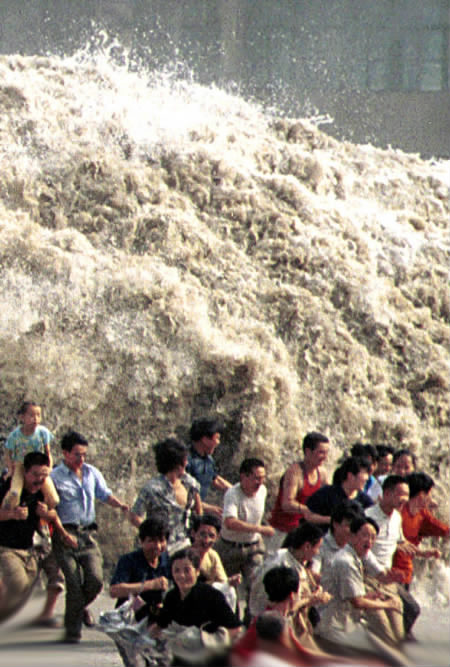
The Day the Sea Spilt Over the Land

by Theresa Wood

The day the sea spilt over the land
Beth’s children were playing in the sand.
She saw the wave and began to run
trying to gather them into her arms.
And Po the ice-cream maker’s stall
with sweets and candy and nuts to sell
crumpled as if it was made of sand,
the day the sea spilt over the land.

The day the sea spilt over the land,
a wedding in the church was planned.
Sumi had put on her wedding gown
and all the guests were in town.
The tables were laid out in the sun,
families laughing and having fun
‘til the huge wave caught them unawares
and dragged them out to distant shores.


The day the sea spilt over the land
dawned fine and sunny with little wind.
Women at home were beginning their chores
with their children playing out of doors.
Many of their fathers were fishermen
already bringing the first catch in
when the mountain of water stopped the sun
and took their lives, nearly all of them.

The day the sea spilt over the land
was the day no-one ever could imagine.
Like a watercolour left out in a storm
by the end of the day all the picture was gone.
Like a sandcastle crumbling into the waves
thousands upon thousands lost their lives.
We hold our breath now in shock and wonder
for as simply as a cobweb, we are torn asunder.

© Theresa Wood 2005

Theresa lives in a village outside Rugby and has done one Writing Life assignment as well as having written about 5 stories or more for women’s magazines. She was published in one about 30 years ago and is determined to recapture that magic touch – if only she could put her finger on what it is! Meanwhile she’s content to write for the local parish magazine ‘Three Churches News’ in which this poem first appeared.
~ ~

BEAUTY IS IN THE EYE OF THE PERCEIVER!


by Lynda E. Blake

I’ve long had an interest in psychology and came across something the other day that I’d like to share.

It might sound simple, but I was reminded of the principle that our thoughts affect everything we do – and more importantly how we do it, and the results we achieve…

Basically, our BELIEFS affect our EXPECTATIONS, which in turn affect our ATTITUDES.

Our beliefs come from many sources, firstly from our parents and peers and the social groups with which we mingle, or from the views we see expressed in the media. But more importantly, these beliefs don’t just ‘exist’, they affect the way we view ourselves and everything and everyone around us. Moulding our expectations…

So, while we’re often unaware of it, no matter what we do, see, hear or experience, we act as if it’s happening through a filter. Almost a prism that colours how it will turn out… In other words we see things according to our attitudes.

“But even optimists can be pessimistic sometimes,” you might say. And true, of course they can, but just by being aware of the link between our beliefs, expectations and attitudes we can be aware of what is happening and maybe take the first step towards changing things we don’t like. Perhaps then we can enjoy more fulfilment, less stress, and a better quality of life? Think about it! And above all, question, question, question!

© Lynda E. Blake 2005

Lynda’s portrait appears under her story 'Changing Faces' in November’s Playground ‘Fireworks and Faces’.

~ ~

The Dusty Box

by Yara Doleh

In a dusty box in the basement there were all sorts of antiques and old stuff. Lily, the 11-year-old girl felt like it was her dream box. Overjoyed and excited with the treasure she has found, she forgot her parents’ punishment, wiped her tears away and started taking out one piece at a time with complete care and caution, and delicately tried to clean them.

Dusting away what the years had left behind, she found an old watch. It was big, a man's watch. She took it in her hands, huffed the dust which was accumulating on it, and turned it around to find writing engraved on the back. She tried to read what was written, but as the light was dim, she simply couldn’t so she decided to put it back. But, just before it touched the table where she was about to place it, the back of the watch opened and a small picture fell down. She picked up the picture to find a couple standing there, a man and a woman; the woman looked familiar to her. But, as she was more excited about the other stuff, she just slide it into her pocket and continued her dusting.

The treasure was enormous indeed: china, cutlery, candleholders, and much more. Bit by bit, every single piece she cleaned started glittering, and came back to life, it looked as if it was just used a while ago. Seeing how wonderful they looked, her excitement increased; she gathered the pieces, and started arranging them in the small basement room. Once everything was put in its place, the whole room brightened, as if each piece had found its original place.

Once she finished, a banquet hall was ready, only food and people were missing to bring more taste and color to the beautiful set of authentic antiques. She stood there watching the completion of her work, proud of her discovery as well as her organizing skills. After spending sometime playing around, dancing and talking with her imaginary friends, she felt tired; she looked around, trying to find a chair to sit on. She could only find boxes lying around, so she took a couple of them, placed them on top of each other and sat down. Resting her head on the table, she went into a deep sleep.

She woke up at a voice calling out her name. But it wasn’t her mother’s voice; it was somehow different. Suddenly the door opened, and a young girl came in, she smiled, and said in a loud voice, “Mom, I found grandma, she is in the basement, as usual!” Once she stood up, something fell on the ground. It was the old watch. She bent down and picked it up. She turned its back to read the engraved writing: “For You On Your 50th Birthday. Your wife, Lily!”

© Yara Doleh 2005

Here's Yara with her son Adam, aged 16 months. Yara's biog. appears on Playground 4


~ ~

Writing on Demand

from Trevor Lockwood

200 words she said, by today.
What do you say, but OK?
Then came that moment of panic,
the phone started to ring,
I knew who it was, and No,
I hadn't even started to do
THAT job yet . . .
and I had to get a new doorknob for the bathroom door -
No, no, no, don't go there, but it could be fun.
I needed a pee,
desperately
but decided that would set the deadline for me.
I'd write until I couldn't hold on any longer . . .
(besides the bathroom door would only swing open at the wrong moment.)
That had me thinking about

Jenny
She danced and sang as my Teddy Bear,
said 'You are my Sunshine' from the lights of the stage
Soubrette made dreams
an acrobatic blonde dancing on my tender heart
in Skegness took my virginity without mention.

Too much of this world she knew
yet she sought not the sailor's game.
Was just a child of the 60s
doing what we all did then
'Where is the Love' was to blame.

The child that became
has now a much better name
than those that fumbled together in her creation.
Genteel and wed
to a producer of plays
closely watched by her lonely mother.

Happiness is always tinged with sadness, isn't it? Must get a new knob, after I've had that pee.

© Writing Life® 2006

Trevor Lockwood has been a published writer for 240 years. (He’s prone to adding
a nought on all numbers.) Always ready to rise to a challenge he was asked to
write something ‘sweet and sexy’ for this slot and he didn’t let us down. A
one-time co-writer with Bernie Ross he lives life chasing his tail, promising to
mend things, writing and dreaming about romantic moments both true and imagined. You can read more of his work on
http://www.spatec.blogspot.com/

~ ~

The Secret Diary

by E. Green

I've been here before. How do I know? Well, I recognise the tree, the lights and the presents. The family always decorates the house like this in winter. They don't wrap me up any more as the young lady knows what her present is and she's eager to get on with her writing. Yes, she's a writer. A good writer, if you ask me. How should I know? I'm her personal diary.

She started writing in my pages four years ago, and, as I'm a five-year diary, this will be my final year under the Christmas tree.

You want to see what she's writing? Can't show, won't show. That's me, true to my lady, my lady Jane. My clasp is shut and I can't be opened till tomorrow when they all come downstairs.
If my clasp is opened, the spell will be broken. What spell? You may well ask. The spell of writing. It's a kind of special magic, a gift that everyone wants. She uses a pen and ink and writes things, words, on my pages. No! Not ordinary words. Ideas for a story, a love story that will be read for ever.


No! I won't let you see the words. They're private. Yes, I suppose I could recite the first line that I can remember. I'll have to be quick. I can hear them coming. I can hear them giggling.

Well, the story starts like this:

'It is a truth universally acknowledged...'

Shhhh! They're here!

© E. Green 2005

E. Green is aged 62, a retired business executive. Married 39 years, he has two sons, two grandchildren. With a career in business management, specialising in finance, business writing became highly developed, but business plans, budgets, and annual reports offered no scope for creativity.
He says: “I always enjoyed reading, in particular Dick Francis’ novels of which I own the complete set of paperbacks. In 2003 I went on a one-year course for creative writing at the local college. Short stories, poetry, and drama were equally covered but I am especially keen on novel writing as its length and structure give opportunities for developing character and plot. I have entered some writing competitions but received no prizes yet. Have widened my reading to cover a range of crime/thriller writers. My preferred writers at present are Val McDermid, Ian Rankin, John Grisham, and Robert Goddard. My current project is a crime story about art fraud.”

Thursday, December 15, 2005

Calm before the Storm


Christmas is coming, we are all scurrying around to buy presents for our loved ones and to do other things that will make our 'holiday' and theirs as good as it can be. So I'm not expecting to receive much writing from anyone until the New Year when maybe the fruits of our sleep and dreams will bring forth some literary gems.

So Playground remains static except for this brief entry.

It would be nice, it would be rewarding and feel that our online ezine is worthwhile if some students were to read what's here and write comments - good and critical - on what's been published so far. It is hardly a Playground when there's no-one else to play, rather more like a glass cage, indeed a padded glasshouse.

Have your say on the message board www.writinglife.org.uk/students/view.php - the username and password are on the foot of your assignments. And for heaven's sake think of sending something to the editor (me) to go on the next edition in January. I've had only one submission so far. The idea is to experiment, test the water. It doesn't have to be a perfect piece, honest. And I really feel a failure when people won’t even send me nonsense!

Meanwhile Happy Christmas to all and may 2006 be everything you want it to be.

Bernie

Wednesday, November 02, 2005

FIREWORKS AND FACES for PLAYGROUND # 4


LifeLines November 2005 - Write it with Fireworks

Put a Banger up its Behind. Light it with sparkle, give it crackle, snap and bang! The effort of getting a story onto the page, finding the right voice, untangling past tense, present and passive – it all seems so difficult and then your tutor asks you to consider elaborate prose! At that point perhaps you think forget it. But actually, writing prose that’s alight and burning with a flame of its own could solve all your problems like a bucket of water over squabbling cats.

John carried the suitcase out to the car, feeling he shouldn’t have agreed to his daughter’s leaving. He had tried to warn Lisa of the dangers of marrying an aspiring rock star and his repeated efforts to engineer romances with better sorts of fellows made her all the more stubborn. Now he was ashamed of the clothes she wore and of those inside the case.

Make your sentences deeply instinctual and defiant!

John wanted to throw his daughter’s suitcase down the steps to the car. Let it thump on every stair, hammering into Lisa some kind of sense: that marrying a wannabe rock star was disastrous and final as far as he was concerned. Cruel satisfaction clipped his thoughts as he pictured the case falling open and dispersing her numerous ragged jeans and beaded jackets into the path of oncoming traffic. Better still if it were smashed to smithereens by one of his young colleagues. That would serve her right for rejecting every one of their romantic submissions. . .

It doesn’t reveal John’s own part in matchmaking but you get the gist and you have to admit, there’s more meat in the second description, yet it’s not so clumsy. Think fireworks. Does it come from your heart? Think colour, drama, defiance; and your prose will light up the sky.

© Bernie Ross 2005

GET PUBLISHED IN A WEEKLY

GET PUBLISHED ONLINE: GET PUBLISHED IN A WEEKLY
A few weeks ago I wrote to My Weekly asking if there was any reason students should be wary of being published on a ‘low-volume’ traffic website like Writing Life in case it should jeopardise the chance of the work being accepted in the magazine. Here is the reply I received within about three weeks:

Dear Bernie,

Thank you for your letter addressed to Harrison Watson (who has now retired).

Please do not discourage your students from submitting work to My Weekly just because this has been published on low-volume writers' websites. All we would ask is that students should disclose any previous publication of their work when they submit it, as the publication history may dictate the rights we can buy if the work is acceptable.

If you would like to receive copies of our contributors' guidelines, please do not hesitate to get in touch.

Best wishes,

Sally

Sally Hampton
Editor
My Weekly
80 Kingsway
EastDundee
DD4 8SL
Tel: 01382 575106
Email: shampton@dcthomson.co.uk

~ ~

CHANGING FACES by Lynda E Blake

It was Tom’s idea. I pulled a face and resisted, but gradually he won me round. I knew he was right; we needed to spend more time together. Lately it was always work, the kids, or something…

We arrived before most people, but at least we found the best spot for the bonfire. And as I stared down at the jumbled pile of wood watching how it struggled for life, I realised how much it was like Tom and me. Just like the fire we were struggling to survive: struggling to find the missing spark that would re-ignite our relationship.

Shivering I realised that just as our layers of clothes couldn’t quite keep out the cold night air, the layers of life we placed around us couldn’t quite keep away the chill from our hearts.

As the flames grew and the people gathered, the shadows making patterns on their faces in the darkness, Tom took my hand. Suddenly I was so aware of his closeness. There was just the bonfire and Tom.

At first I hardly noticed the fireworks, until Tom whispered in my ear, “I love you.” So he’d felt it too?

The world around me erupted into a cascade of colourful light and laughter. Suddenly I knew we’d rekindled the fire. Our faces said it all…

THE END

© Lynda E. Blake 2005


When Lynda Blake was fourteen she had a devastating cycling accident, but far from this ruining her life she has since earned many Home Study certificates, and a BSc Honours degree with the Open University.

Her joy in writing is a reminder that anything is possible if we want it badly enough.

[Lynda is visually impaired and does the email-only WL course at
www.writing-in-a-nutshell.net/ using a screenreader called ‘Jaws’. You can contact her on lynda@lyndab.freeserve.co.uk because she can’t easily get to the message board, as Jaws doesn’t seem to like it. ]

DID YOU KNOW?

There are nine orders of angels? In descending order:
Seraphim
Cherubim
Thrones
Dominations/Dominions

Virtues
Powers
Principalities
Archangels
Angels

(Confirming that I am, humbly, an angel. BR.)

~ ~

Do you know what a poetaster is?

It's a poet of poor quality!

~ ~

WARM AND WONDERFUL QUOTES

“Books are not made for furniture, but there is nothing else that so beautifully furnishes a house." ~ Henry Ward Beecher (1813 - 1887), US abolitionist & clergyman.

Commenting on a complaint from a Mr. Arthur Purdey about a large gas bill, a spokesman for North West Gas said, "We agree it was rather high for the time of year. It's possible Mr. Purdey has been charged for the gas used up during the explosion that destroyed his house." (The Daily Telegraph)

“Reading, after a certain age, diverts the mind too much from its creative pursuits. Any man who reads too much and uses his own brain too little falls into lazy habits. “ ~ Albert Einstein (1879 - 1955)

~ ~

IT’S THE WAY YOU TELL IT

I’ve been approached but Brad Ashton, writer of The Funny Thing about Writing Comedy, and he has sent me a copy of his book in return for some advice. He says:

“It has been described as superb by The Association of Writers' Groups and The Cartoonists Club of Gt. Britain and WRITERS' FORUM magazine who have serialised four chapters from it. It is a follow-on from my earlier book HOW TO WRITE COMEDY which, though now out-of-print, is still used in many universities for their Media & Communications courses.”
The price is normally £12.50 but he’ll sell it to you for £10. Say you’re a Writing Life student. Cheques to: BRAD ASHTON. 7, Abbotshall Avenue, Southgate, London N14 7JU Tel: 0208 886 5343 email:
ashtons@london.com

~ ~

OUR BABY by Deborah Raine

by Deborah Raine

He has good days and bad days. I’m always there for him. He feels it more than me, you see. Well, he would.

Today is a bad day. It started at the breakfast table, “I keep seeing her…sleeping in her cot. Just sleeping,” he muttered.

It’s been a year now. A year without Amy. A year of torment and anguish for one of us. He just can’t see it my way. Because he doesn’t know. If I could only make him see…but I can’t. Would it make him feel better? Would he understand? No, of course not.

Let him believe in Cot Death.

But, can I let him go through this inner turmoil much longer? Maybe, if I explain that I did it for us…make him see that Amy was not going to repair our marriage.

He’d feel better, knowing Amy experienced no pain; that it was quick and easy. As I held the pillow over her tiny face, it wasn’t long before she fell limp.

If I choose the right words, maybe…just maybe, he will see why I couldn’t allow Amy to live. If he had experienced the shrill in my head each time she cried, if he had looked into her eyes and saw hatred staring back at him too, he would understand. Amy was the devil. She would have torn us apart.

We won’t have anymore babies. Nothing will interfere with my head. Never. But I won’t tell him that.

© Deborah Raine 2005

Debs needs no biog for most readers. She is ex-WL student and ex-WL ezine ‘The Muse’ editor and is as busy as ever with ideas, websites and forums:

Wet Ink http://www.wetink.biz/
Novel a Year http://www.novel-a-year.com/
Open Forum http://carryonwriting.invisionzone.com/index.php
NAY Forum http://novel-a-year.invisionzone.com/index.php